It all starts with a look.
Our educational approach
Nosso método é a partir do Olhar para a Pessoa e todas as atividades desenvolvidas são propostas de encontros com as crianças, adolescentes, famílias, colaboradores e cada um que participa do ambiente educativo.
- Valorização da pessoa
- Olhar atento a realidade
- Fazer ‘com’ e não ‘para’
- Acolhe quem é acolhido
Charisma and method
“The primary concern of a true and proper education is to educate people for what they were originally created to be. A true education is the education of the human being that exists within us.”
Read more
Children and Education
“It is natural for children to be curious about life—its colors, movements, sounds, smells, and tastes. They want to learn and discover everything.”
Read more
Reality and experience
An educational experience is one that helps an individual grow as a person; it broadens their understanding and stimulates their ability to observe and form judgments about reality.
Read more
Welcoming
To welcome someone is to attend to the whole person; it means embracing their needs in every way and establishing a positive bond that helps them feel cared for and loved.
Read more
Focus on the Person
“The most important thing is to focus on people. Everyday life is an immense fortune. It’s full of discoveries and wonders, because each person is an immense treasure.”
Read more
Encounters
A biannual meeting held since 2004 to reflect on our origins and our educational experience, featuring a guest speaker who shares insights on specific topics.
Read more
"To educate is to introduce a person to the whole of reality” – Dom Giussani
Charisma and Method
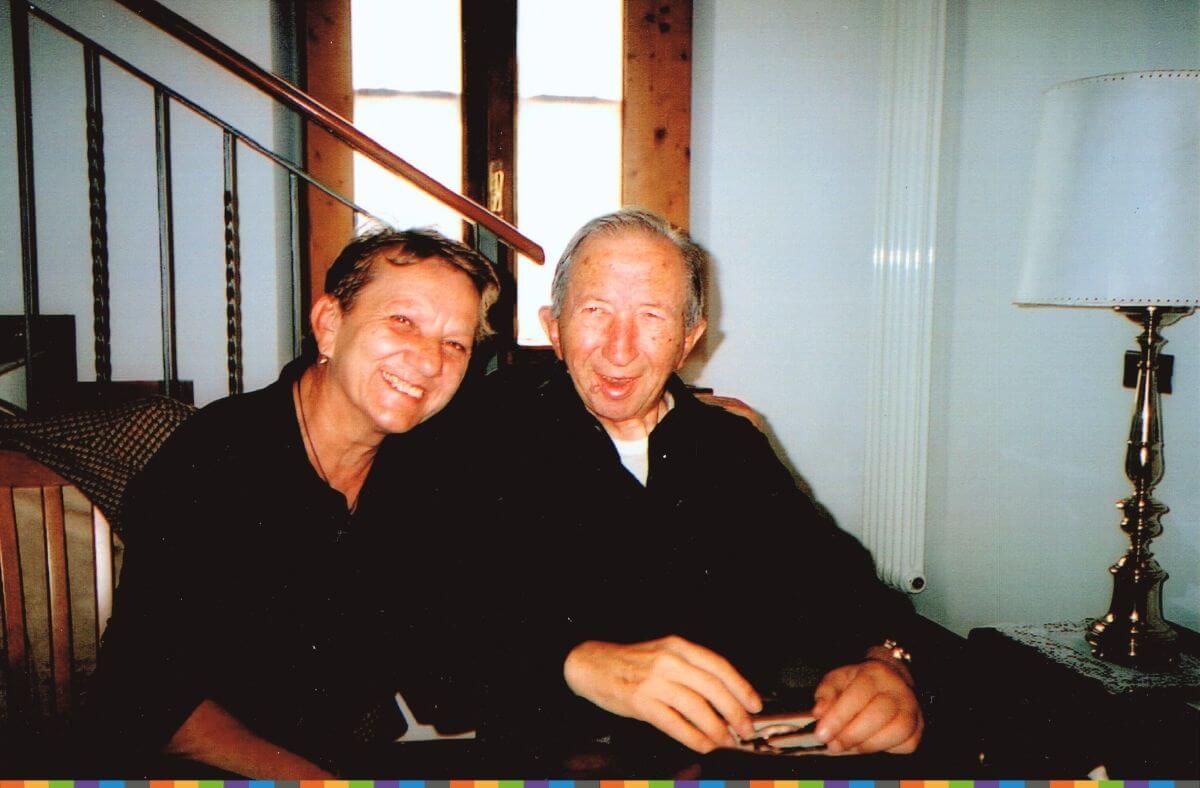
Those who know us understand the power of the Obras' charisma, the richness of our shared experiences, and the unity among our collaborators regarding our working method. This has been developed over time, right from the beginning — back when Dom Giussani and Rosa Brambilla first met — both of whom were true embodiments of charisma and method! We perceive the beauty created through a commitment to true education in the simplicity of these encounters and experiences.
This is how an educational method is shared: by believing that education is about introducing people to the full reality of life, while always considering the origin of humanity and the world around us — a focus on human nature. And always alongside the family, the primary agent in the educational journey.
A realidade e a experiência
Quando na nossa experiência falamos em natureza, falamos do sentido original, verdadeiro das coisas e das pessoas. Afirmar a natureza das coisas numa época em que se experimenta uma grande desorientação e uma vivência frenética do cotidiano sem pausa pra se pensar no que se faz, por que se faz, sem tempo para refletir sobre a maneira que eu me coloco diante da realidade, é propor nos voltarmos pra tudo aquilo que existe de humano em nós.
Realidade e experiência são aliadas fundamentais em nosso processo educativo. A realidade (uma pessoa, um lugar, um objeto ou um fato) se impõe de modo inequívoco e a experiência faz conhecer essa realidade, acolhendo-a como oportunidade sempre positiva de aprendizagem e de crescimento.
A experiência educativa é aquela que ajuda o sujeito a crescer como pessoa; que alarga a sua razão e estimula sua capacidade de observar e dar um juízo sobre a realidade.
Texto escrito e falado por Vanessa Soares, Supervisora Educativa
Children and Education
From birth, children learn more than at any other time in their lives. They have a natural desire to understand the world through their bodies, expressed through play, movement, speech and, above all, their experiences and relationships with parents, family members and educators. We develop as individuals through our loving relationships and emotional bonds, and we help children to see reality in its entirety — people, and especially themselves.
Children are born dependent on specific care to meet their basic needs, such as hunger, sleep and hygiene. However, they have an even greater need — to be loved and seen — a need that lies deep within our hearts! Just like us, children need to be noticed and loved for who they are. They need to be respected as unique and capable beings, and their own pace needs to be taken into account. Childhood is the most important period of a person’s life because character, personality and values are formed during this time. Children also learn how to view and relate to the world through their relationships with adults.
As parents and educators, we are responsible for helping children to make sense of the world. Through our perspective, our relationships with others, and the way we approach things, we teach children about reality — because we educate by example!
Children are naturally curious and want to learn and experiment. Our mission is to nurture this innate desire to discover the beauty of reality!
Text: Luciana Perdigão – Educator
The focus on the person
How can I explain this important aspect of the method? Interestingly, in a poem called 'Ensinamento', Adélia Prado begins by saying, "My mother thought that studying was the best thing in the world. It isn’t.'
Therefore, in our educational work, the most important thing is the individual. Every child, mother, father, educator and collaborator is at the heart of the matter.
Why?
Because a mother’s desire isn’t just to provide a safe place where her baby will be cared for, fed and educated. She also wants her child to play and receive tenderness and affection. She harbours greater desires, too: for justice, truth, goodness, love and beauty.
This is how we view every family, mother, grandmother or guardian who comes to the nursery to enrol their child or ask for information. They arrive with their entire history, needs, desires and problems. The nursery is where the relationship begins.
They are welcomed with a moment of warmth and listening, which is so important when they reveal their vulnerability. Even when they are told that there are no openings, we often hear words of gratitude because someone was there with them and did not dismiss their needs.
Every routine and every moment in the nursery's daily life is an experience in which children, educators and staff play leading roles.
However, the desire to do good, which is present in each of us, is often hidden behind inappropriate attitudes and behaviours. How do we respond?
We focus on the child, not their behaviour.
There is no set formula or manual, and it's not about finding the right strategy. The family is called upon to participate in determining the path to follow. Together, we help one another to find a way forward.
We firmly believe that the family is always a valuable resource, even when it is fragile or vulnerable.
We always start from the positive aspects that exist in every situation, person and reality, even if they are hidden or unseen. We start from what is present, not what is missing. This approach opens doors and creates possibilities, enabling the family and the child to recognise their own worth.
But what about the educators who collaborate with us?
We firmly believe that everyone is an educator because, as the African proverb says, 'It takes a whole village to raise a child'. Every person is an opportunity for education for the child and their family.
This is a separate topic that we will also address later. For now, our focus on individuals is evident in our meetings, which are not merely theoretical discussions, technical exercises or pedagogical strategies, but rather an opportunity to educate ourselves in self-awareness: who we are, what we bring to the table, and how we communicate with children and families when we interact with them.
The images in this video illustrate some of the daily life in our nursery and other projects, as well as many other moments, such as when children arrive and leave, bath time, mealtimes, hygiene routines, nap time, staff training, presentations, activities and playtime.
I can certainly affirm that our day-to-day life with the children and families is immensely enriching and a constant source of learning. It is full of discoveries and wonders because each person is a unique treasure. But is this real? Is it possible?
Cecília Meireles answers for me: 'But when I speak of these small, certain joys that lie before every window, some say such things don’t exist, some say they exist only before my windows, and some say that one must learn to look in order to see them this way.' – 'A arte de ser feliz'/Cecília Meireles
Narration: Virginia e Lúcia - Educator
Welcoming
Welcoming someone means attending to their needs in every aspect and establishing a positive bond that makes them feel cared for and loved.
From an educational perspective, welcoming someone does not mean that everything will always be fine. On the contrary, it means acknowledging and respecting diversity, and addressing it in a way that fosters growth for everyone involved. Therefore, genuine interest in the other person is essential.
"Welcoming and sharing are the only forms of humanly dignified relationships because only in them is a person truly a person — that is, in relationship with the infinite... That is why, ultimately, gratuitousness must reside in welcoming a poor person and welcoming the most beloved person." (D. Giussani).
Here at 'Obras Educativas Padre Giussani', this welcome is filled with fraternity. It is an open embrace from people passionate about others' destinies, welcoming them into their hearts unreservedly and with the sole concern of developing and growing those involved.
Welcoming someone fully means looking at reality as it presents itself, without being scandalised. This enables us to be moved and embrace the destiny of the person entrusted to us. We know that those who come to us may be without hope, but true welcome can help them to see their own story — even if it is dramatic — in a positive light as an opportunity for growth.
We understand that the family is the primary educator, so it is important to foster a sense of belonging. We promote an experience open to forgiveness, love and affection, and an awareness of the positive impact others have on our lives. However, it is mercy that helps them to become passionate about their own destiny, making them the protagonists of their own story.
'Those who are welcomed welcome others' is one of our most important phrases; that is why we start with the Obras workers, because we understand that we all carry our own stories, which are often full of wounds that may never heal, but which can be treated.
Welcoming someone means understanding that the process involves overcoming challenges and change, and committing to living with those entrusted to us — making a new beginning where goodness and beauty can flourish. We believe that companionship in this process is key to making change possible.
This involves living with joy and experiencing the happiness of those who rediscover life every day, and believing that this can be part of a new way of being.
Welcoming others also means sharing life and friends, connecting with the community and being together.
Generosity is also part of welcoming. This occurs when people give of themselves without expecting anything in return and accept help without hesitation — that is, it is the willingness of those who care and those who accept care. There must be freedom between those being welcomed and those welcoming them. For this reason, our work is based on the principle of 'doing with', not 'doing for', giving everyone the opportunity to take action. We respect the growth process without rushing it and set aside pretension, because the self alone can do nothing — it is a journey taken together.
To welcome someone is to offer them refuge, protection and shelter. It is to give or receive hospitality, even if only in spirit, in a world that is so unequal and in need of love.
Narration: Elma Lopes – Supervisor – Casa Novella